
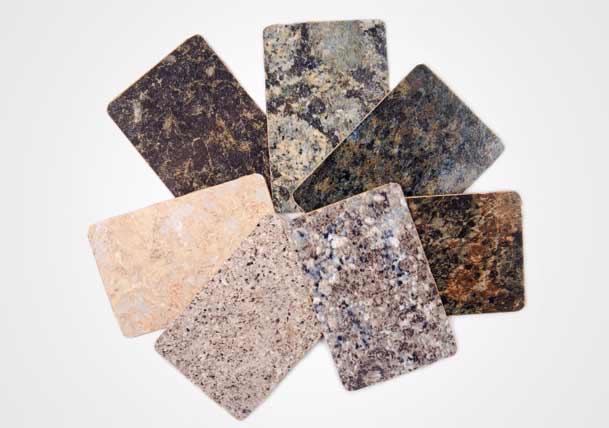
One of the easiest ways to liven up a kitchen or bathroom is to update its countertops. Out-of-date, drab, or worn countertops have a tendency to bring down the style of any room. However, bathroom and kitchen countertops need to do more than just look beautiful—they need to be tough. Regularly splattered with food and water, wiped down with cleaning products, or scalded with hot pans and curling irons, bathroom and kitchen countertops face a daily gauntlet of wear and tear.
As you shop for countertops, consider the susceptibility of each material to damage. Does the countertop have a porous surface that will encourage bacteria and mold buildup if not cleaned regularly? Will you be able to rest hot pans on the surface? Also, honestly assess how much you’re willing to maintain and care for your countertop, as some materials require regular attention. From the daily bombardment of food and cleaning products in the kitchen to an array of personal hygiene supplies in the bathroom, sometimes the best countertop is a durable one.
The following chart provides an overview of the benefits and drawbacks of some popular countertop materials:
COUNTERTOP MATERIALADVANTAGESDISADVANTAGES
Granite
Luxurious material with natural beauty
Resistant to stains
Durable
Available in many colors and patterns
Very porous unless sealed
Should be resealed periodically if used heavily
Patterns in stone can be inconsistent
Marble
High-end, luxurious material
Stains easily
Not practical for kitchens or baths that see heavy use
Cultured Marble
Economical alternative to natural marble
Resistant to stains when properly finished
Easy to clean
Available in integrated sink and countertop units
Cannot be resurfaced to remedy any scratches in the marble surface
Laminate
Most economical of countertop materials
Easy to clean
Resistant to stains
Can be trimmed or accented with wood or tile to enhance the look
Can be painted with epoxy paint for an inexpensive update
Susceptible to burns, dulling, and deterioration
Scratches and chips are permanent
Solid Surface
Very popular countertop choice for its stonelike appearance and seamless surface
Can include decorative features such as crushed stones
Available in integrated sink and countertop units
Susceptible to burns or damage from heavy objects
Fine sandpaper is needed to fix minor abrasions
Wood
Creates rustic charm
Can be used as a cutting board in food preparation
Very porous
Susceptible to water damage
Difficult to clean
Needs to be sealed to avoid bacterial growth
Tile
Resistant to stains, discoloration, and burns
Wide range of colors, sizes, and styles to choose from
Grout between the tiles traps dirt, water, and stains
Mildew can settle in between the tiles if grout is not regularly cleaned
Soapstone
Completely nonporous surface
Does not require sealing
Does not require a substrate (like a subfloor for countertops) to be installed underneath the stone
Needs to have mineral oil applied during the first month to bring out natural beauty
Limited color choices
A quality bathroom and kitchen remodeling specialist will be able to help you find the right countertops to suit your unique style and daily routine. No matter what countertops you choose to bring into your home, be sure to follow manufacturer recommendations for care and maintenance. Avoid letting spills and stains sit on the surface, and regularly clean between any seams to avoid bacteria and mildew buildup.

![Pros and Cons of 8 Countertop Materials [Infographic]](https://bprblogassets.s3.amazonaws.com/blog/wp-content/uploads/2018/08/15082350/countertop-samples-on-white-background.jpg)
