
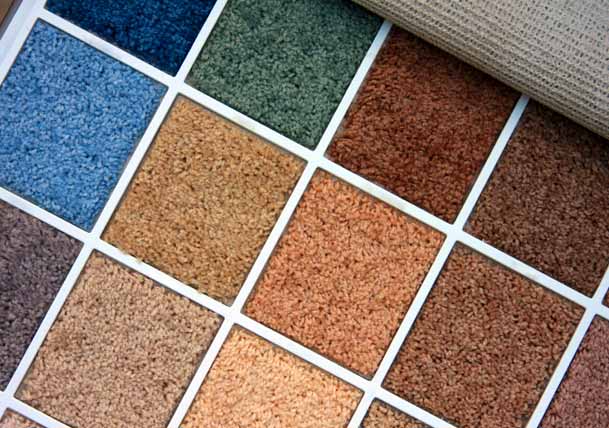
Nothing warms up—and quiets down—the rooms of a home like carpeted floors. With the wide range of fibers, textures, and styles on the market, it is important to make informed choices when selecting carpet for the various rooms in your home. Carpet can be a considerable financial investment, and choosing the best type for each room can go a long way toward protecting that investment.
Carpet Fibers
With advances in technology, carpets that are both lovely and highly durable can be made from either natural or synthetic fibers; however, the difference in each fiber’s resistance to stains, abrasion, fading, and crushing make some more suitable to certain home environments than others, as the chart below will show.
CARPET FIBER PROPERTIESSUGGESTED USE
Wool
Soft feel- Fair abrasion resistance
- Excellent crush resistance
- Moderate stain resistance
- Poor sunlight resistance
- Burn test: Self-extinguishes
Low-traffic and/or highly visible areas: master bedroom, formal living room
Nylon
- Easy to clean
- Excellent abrasion resistance
- Excellent crush resistance
- Can be manufactured to resist stains
- Poor sunlight resistance
- Burn test: Burns slowly; melts
High-traffic, high-use areas: hallway, child’s bedroom, playroom, living room
Polyester
- Moderate abrasion resistance (may show some pilling)
- Crush resistance depends on density
- Resists water-soluble stains
- Good sunlight resistance
- Burn test: burns slowly; melts
Moderate- to low-traffic areas: formal dining room, study, home entertainment room
Olefin
- Lightweight and inexpensive
- Easy to clean
- Excellent abrasion resistance
- Poor crush resistance
- Excellent stain resistance
- Poor sunlight resistance (extremely heat sensitive)
- Burn test: burns; melts
Low-traffic areas and where spills may be common: guest bedroom, screened porch
Carpet Pile
Tufted carpet consists of yarn inserted into a primary backing that creates a pile—or three-dimensional texture—with a second backing adhered to it to give it stability and strength. Tufted carpet is the most popular type of carpet sold in the United States, and there are three general types: cut pile, loop pile, and cut-and-loop pile.
TYPE OF PILE CONSTRUCTIONCHARACTERISTICS
Cut Pile
        Saxony plus velour


        Individual standing tips; wide range of densities; suitable for most living spaces
Loop Pile
        Level-loop Berber


        Loops form the surface of the carpet; tends to be very durable
Cut-and-Loop Pile
        Sculptured


        Wide variety of patterns and designs; random patterns tend to hide soil
When considering the quality of tufted carpeting, there are other features to consider:
- Density: how tightly the carpet fiber or yarn is packed together and bound into the carpet backing. The denser, the better.
- Pile weight: the number of ounces of fiber in a square yard of carpet; applies to the pile yarn.
- Pile height: the height of the cut pile yarns or uncut loops when measured from the primary backing.
High density and high pile weight mean that more yarn covers the primary backing, which equals increased durability of the carpet. Longer pile is visually appealing and looks luxurious, but it crushes more easily.
Important Note: One mistake that people often make is thinking that Berber is a type of carpet fiber. Berber is actually a very popular type of carpet weave—a loop style.
Carpet Padding
Good carpet padding is essential no matter what type of carpet is selected for a room. According to the Carpet & Rug Institute, the carpet pad provides cushioning underfoot and offers insulation for the room. The proper carpet pad will prolong the life of the carpet, help buffer sound in the room, and help moderate the temperature of the room year-round. Carpet manufacturers attach requirements for carpet padding thickness and density to every carpet produced, and improper cushion selection can void warranties, so it is important to provide the correct padding for whatever type of carpet is purchased.
The type and thickness of cushion you need varies according to traffic levels and patterns. The Carpet & Rug Institute notes that most residential carpet should have a cushion that is between 1/4 and 7/16 inches thick with 6 pounds per cubic foot density, and a Berber or a short pile carpet should have a cushion no more than 3/8 inches thick with 8 pounds density.
The right carpet increases the visual appeal of your rooms as well as their comfort. By selecting carpets carefully and matching the right fiber and pile with the type of room in which it will be used, you can be sure your carpets will be around to tickle your toes for a long time.


